
You Must Treat The Body As Whole
Very rarely is the source of our pain located where we actually feel it.
Our Approach
Strength, not muscle mass, correlates with independence and life expectancy. To solve for strength, you need to lift heavy. In order to lift heavy, you need to move well and move pain free.
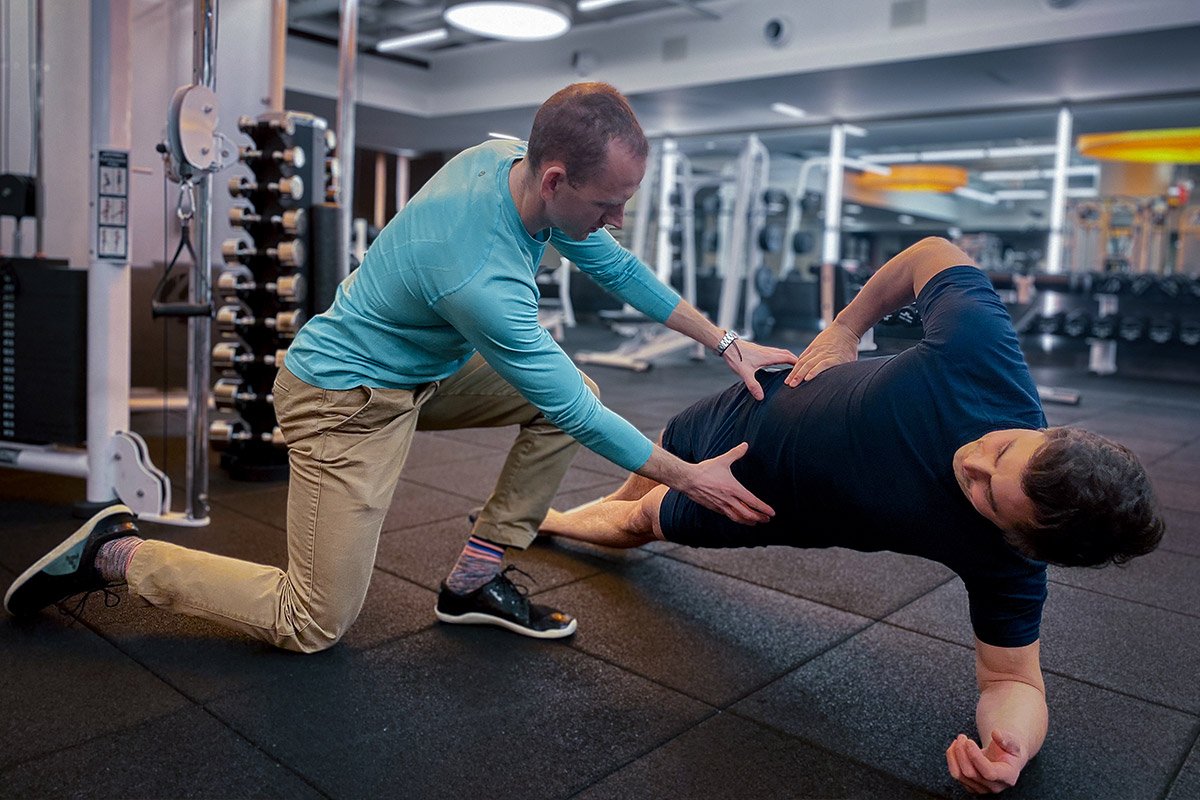
Moving well and effective pain treatment starts with a complete view of the body. My assessment process goes beyond the area of discomfort, examining posture, movement patterns, and injury history to identify the true source of pain/dysfunction.
This comprehensive approach forms the foundation of my training protocol, leading to targeted exercises that address specific movement patterns and restore balance.
Every part of the body is connected, and your customized workout program should reflect that—designed to improve function, strength, reduce pain, and optimize performance.

Find the Tension, and You’ll Find the Answer
The human body isn’t meant to function joint by joint—it works as a connected system. When your back hurts, the problem often isn’t in your back itself. More often, tension above or below that area is pulling on the back, leading to pain or muscle spasms. Like a puppet on strings, if we pull one string to create tension, another string will loosen.
By releasing that tension and reactivating underused muscles, we restore balance across the entire body. True correction rarely comes from stretching alone or strength training alone—it’s about finding the right combination of loosening what’s tight and strengthening what’s long/weak. This integrated approach helps your body move the way it was designed to.
But How?
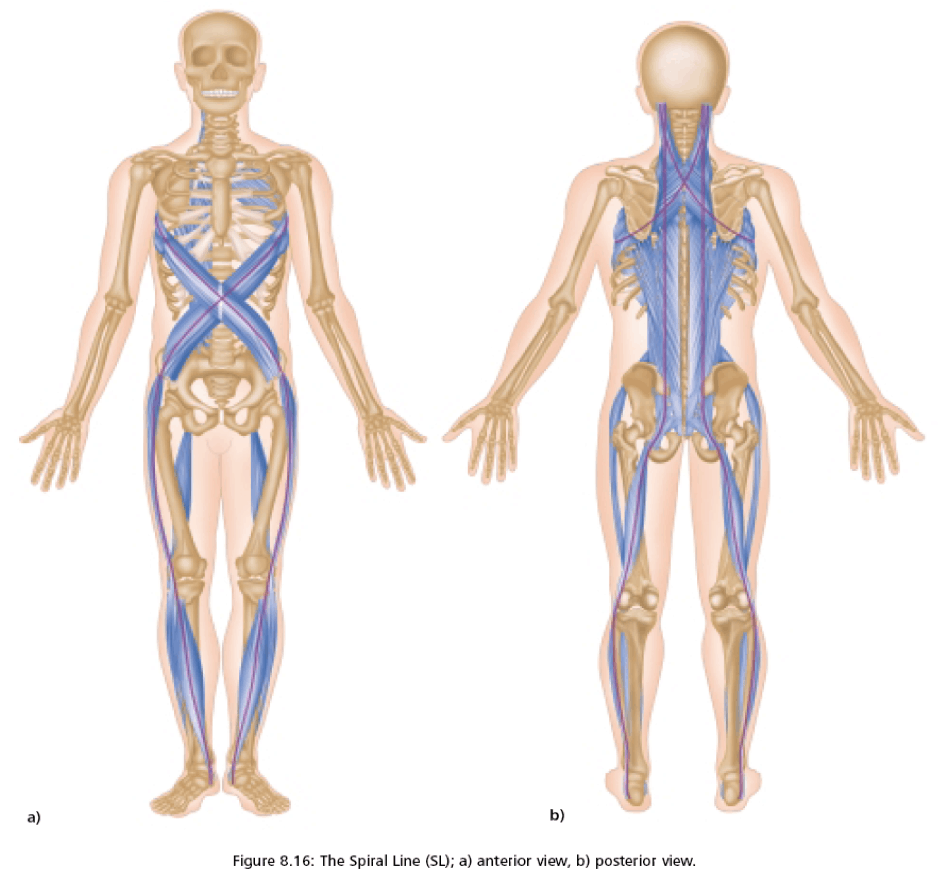
The answer lies in your fascia. You’ve probably heard the term before, but fascia is far more than a buzzword—it’s the key reason humans move fluidly instead of mechanically. While our bodies are built from bones and muscles that function like levers, this entire system is wrapped in an interconnected network of elastic tissue. Fascia links every muscle to the ones around it, creating a seamless chain of movement throughout the body.
A deep understanding of fascia provides the key to truly grasping human movement and the origins of pain.